Asia’s most extraordinary temples rarely announce themselves with signs or queues. They emerge at forest paths, cliff edges, and rivers of morning mist, asking only that you pause.
Each sanctuary here reflects centuries of human longing carved into stone, gold, and silence. They are shaped through carving, gilding, painting, and prayer across generations of devotion. Their beauty feels rare today, existing without apology, irony, or end. And once each year, during the full moon of May, they transform almost imperceptibly.
Incense thickens, robes appear along pathways, and lanterns move gently through the dark. This is Vesak, marking the Buddha’s birth, enlightenment, and passing in quiet reverence. It turns the extraordinary into something beyond description, almost impossible to capture in words.
You do not read it, you simply arrive and experience it.
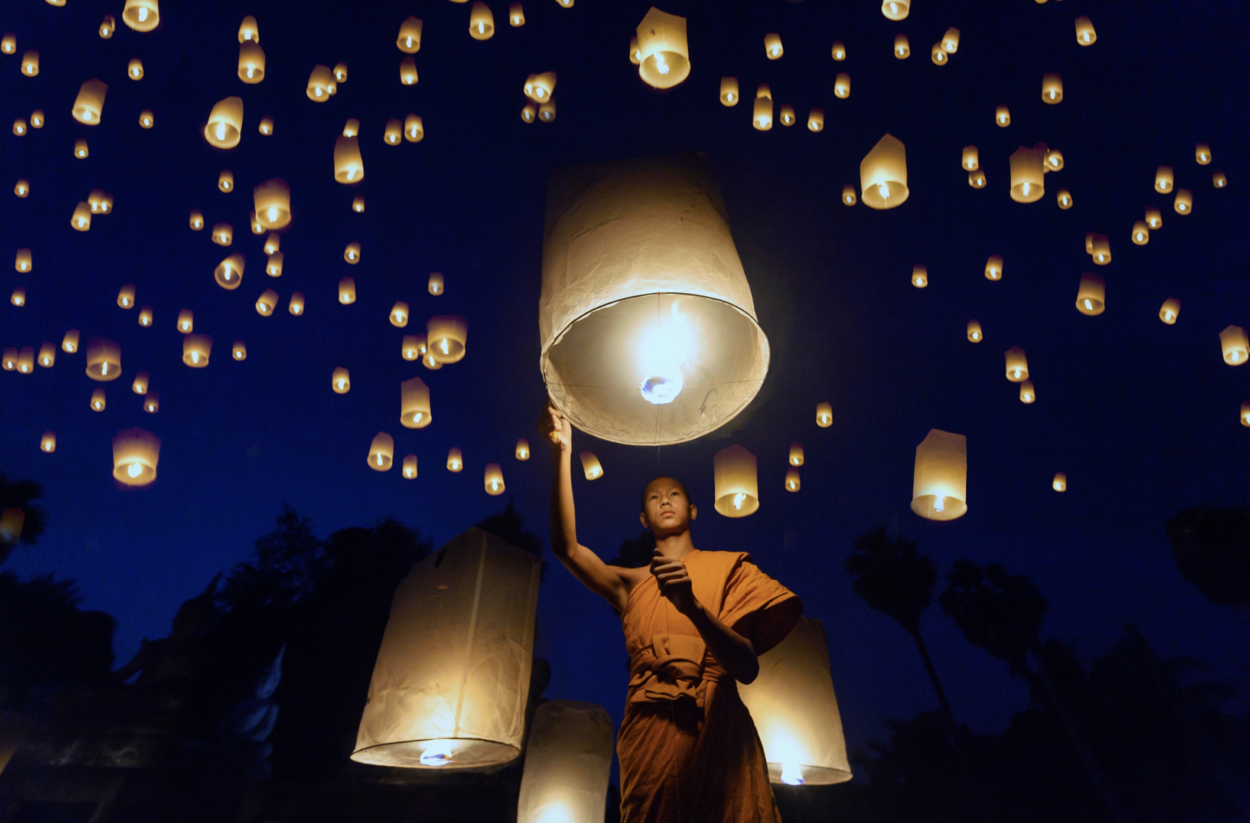
Image courtessy: Grand Hotel dedjokja
Borobudur
Magelang, Central Java — Indonesia
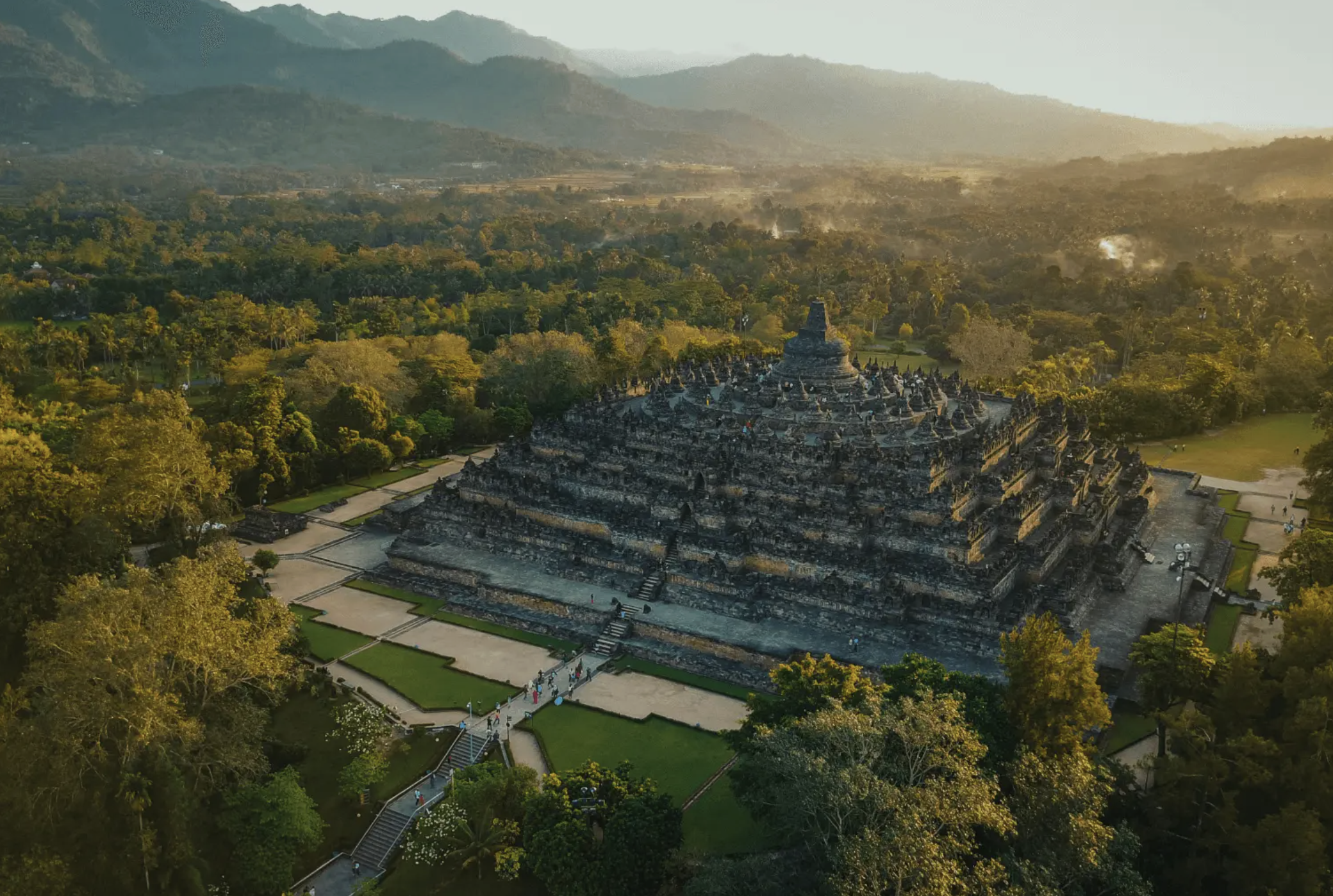
At the heart of Central Java, Borobudur Temple stands as the largest Buddhist monument on Earth. It rises from the Kedu Plain in layered tiers of carved stone, each level teaching a cosmological path. Its design forms a vast mandala across three realms of existence.
The base reflects desire, the middle terraces represent form, and the upper levels embody formlessness. At dawn, the summit reveals why pilgrims have walked here for over twelve centuries. Light spreads across stone stupas, turning philosophy into something physically felt.
On Vesak night, Borobudur transforms into one of Southeast Asia’s most luminous gatherings. Thousands of lanterns lift above the terraces, rising slowly into the dark sky. Each light carries a quiet prayer over the Kedu Plain. Golden points multiply against deep blue night, creating a scene that feels almost unreal.
“Thousands of lanterns climb the night sky above Borobudur, each one a small warm prayer dissolving into the dark.”
The festival is open to the public, but attendance requires advance registration. Details and booking are announced through Borobudur’s official Instagram account, which should be your first stop when planning this journey. Two tiers of experience are available: a full immersive participation, in which you join the ceremony, hold your share lantern, and release it alongside the congregation.
A watch only session for those who prefer to observe the spectacle from a designated vantage point. Both are worth attending. Both will stay with you.
One requirement cuts across both tiers and is non-negotiable: white attire. Guests arrive dressed in all white, transforming the grounds into a sea of luminous figures beneath a full May moon. The sight of thousands clothed in white, faces tilted upward as lanterns lift, is itself an image worth crossing an ocean to witness.
The Essentials: Registration is mandatory and opens weeks in advance. Follow Borobudur’s official Instagram for announcements, as spots fill quickly. All guests must wear white attire. Two sessions are offered: full participation (lantern release included) and watch-only. Arrive early; the atmosphere builds long before the first lantern is lit.
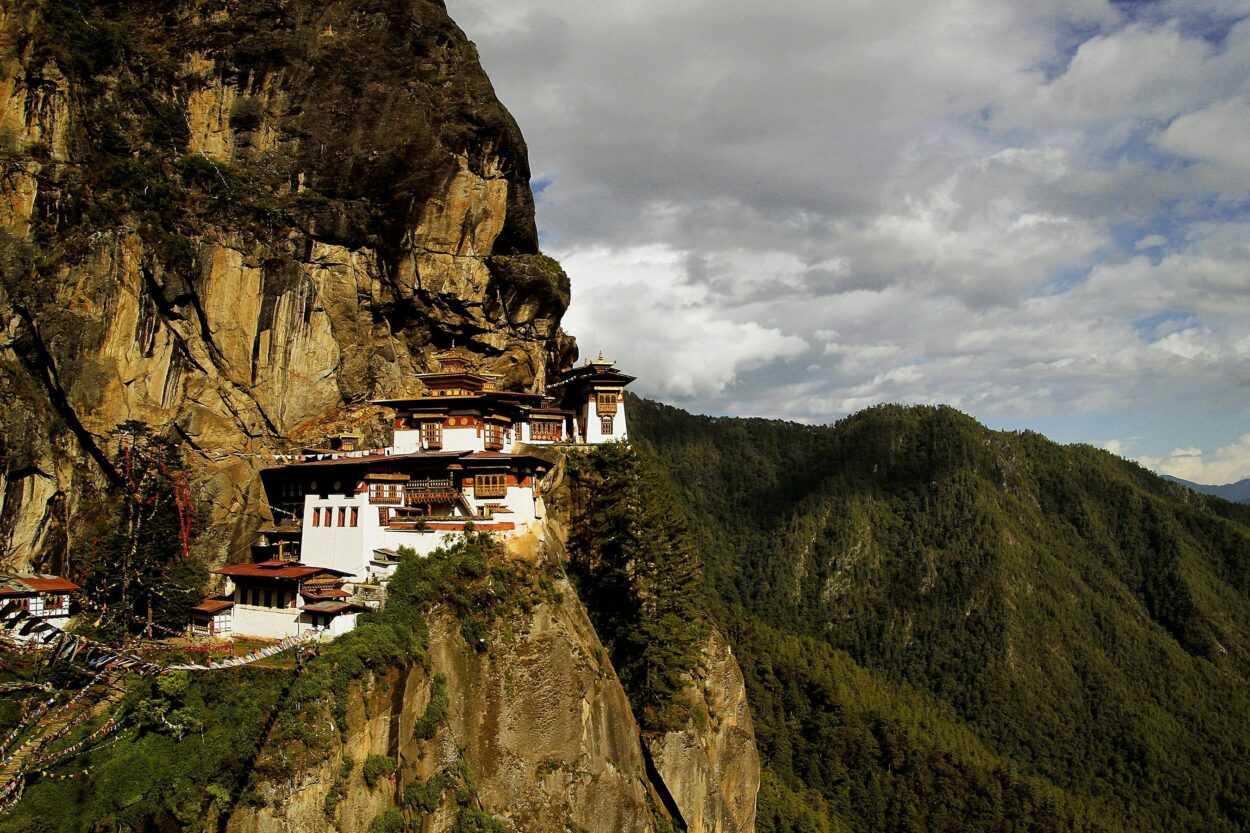
Image courtesy: Pixabay
Taktsang Palphug Monastery
Paro Valley — Bhutan
There is a monastery in Bhutan that appears, by every reasonable measure, to be impossible. Taktsang Palphug — the Tiger’s Nest, clings to a sheer granite cliff face 900 meters above the floor of the Paro Valley. Its white-washed walls anchored to the rock by some combination of faith, engineering, and what feels like sheer spiritual insistence. No photograph prepares you for the first sight of it through the pine trees on the ascent.
The legend is precise and ancient. In the 8th century, the tantric master Guru Rinpoche — Padmasambhava, flew to this cliff on the back of a tigress, landing in a cave where he meditated for three months. The monastery was built around that cave in 1692, and the cave itself remains a consecrated chamber at the complex’s beating heart. To enter it is to step inside a story that has been told, believed, and tended for over a thousand years.
“The Tiger’s Nest does not reward the hurried. The 3-hour climb is part of the encounter — altitude, silence, and forest doing their slow work on you.”
The hike up is steep, fragrant with blue pine and rhododendron, and punctuated by prayer flags snapping in cold Himalayan wind. A waterfall drops between two sections of the monastery, its sound constant and clarifying. Inside the shrines, butter lamps flicker against walls painted in deep ochre and blue. Monks move through low doorways with the unhurried ease of those entirely at home in the improbable.
The Essentials: The hike takes roughly three hours each way from the base car park; horses are available to a midway point. Start before 8am to arrive in soft morning light. All visitors to Bhutan require a visa and must travel through a licensed operator, plan well in advance. Modest dress is required throughout the monastery complex.
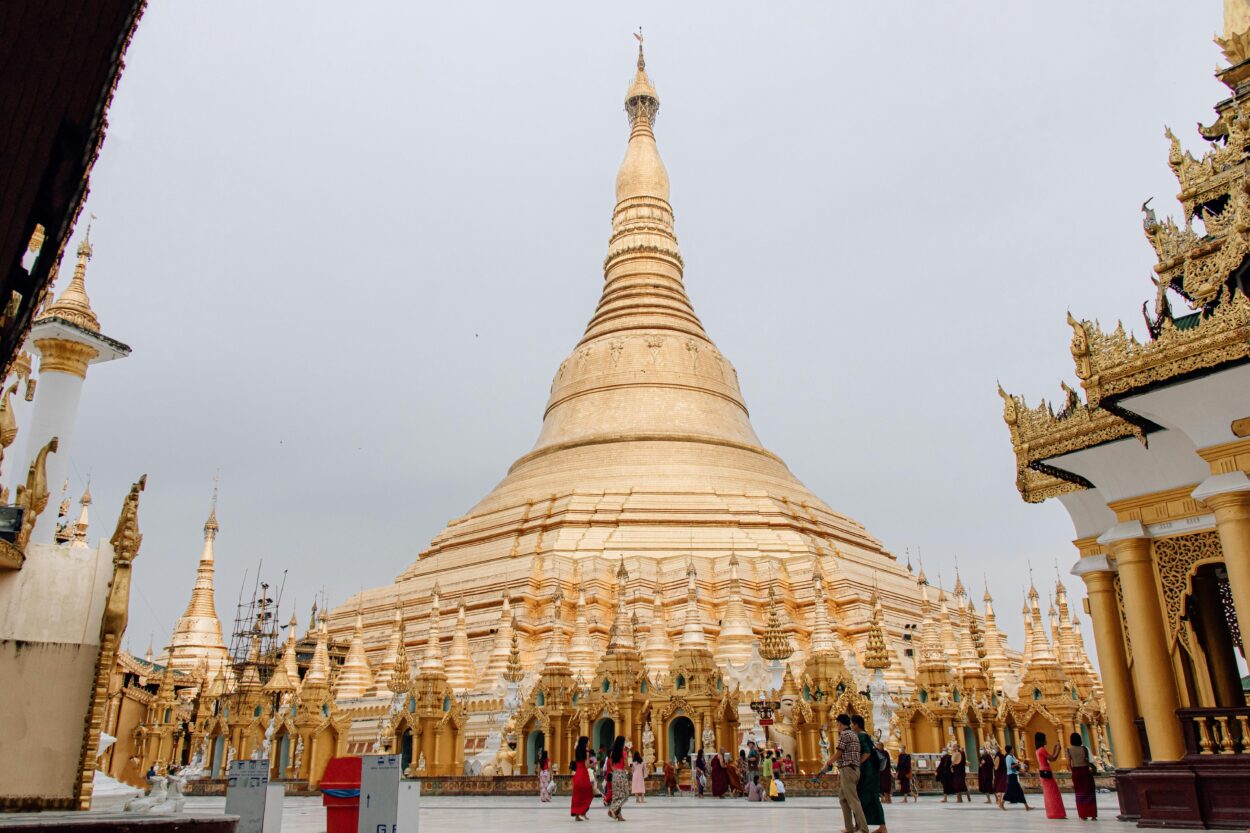
Image courtesy: Zaonar Saizainalin/ Pexels
Shwedagon Pagoda
Yangon — Myanmar
There is no arriving casually at Shwedagon. Leogryph statues guard each entrance with impassive authority, and behind them a marble corridor opens onto a terrace that resembles a small sacred city. Above it all, the main stupa rises 99 meters gold sheathed, visible from every quarter of Yangon. It is not subtle. It has never tried to be.
“In the rays of sunset reflecting on its golden walls, Shwedagon begins to glow with the deep radiance of a burning ruby.”
Shwedagon is believed to contain relics of four previous Buddhas, and its grounds have borne witness to centuries of devotion, protest, and renewal alike. It is a place of living use, not museum quality preservation. Come barefoot, unhurried, and stay until the last light fades from gold to rose.
The Essentials: Arrive before 7am or after 4pm. Shoes must be removed at the base of the hill; carry them in a daypack. The eastern staircase offers the most atmospheric approach to the terrace.
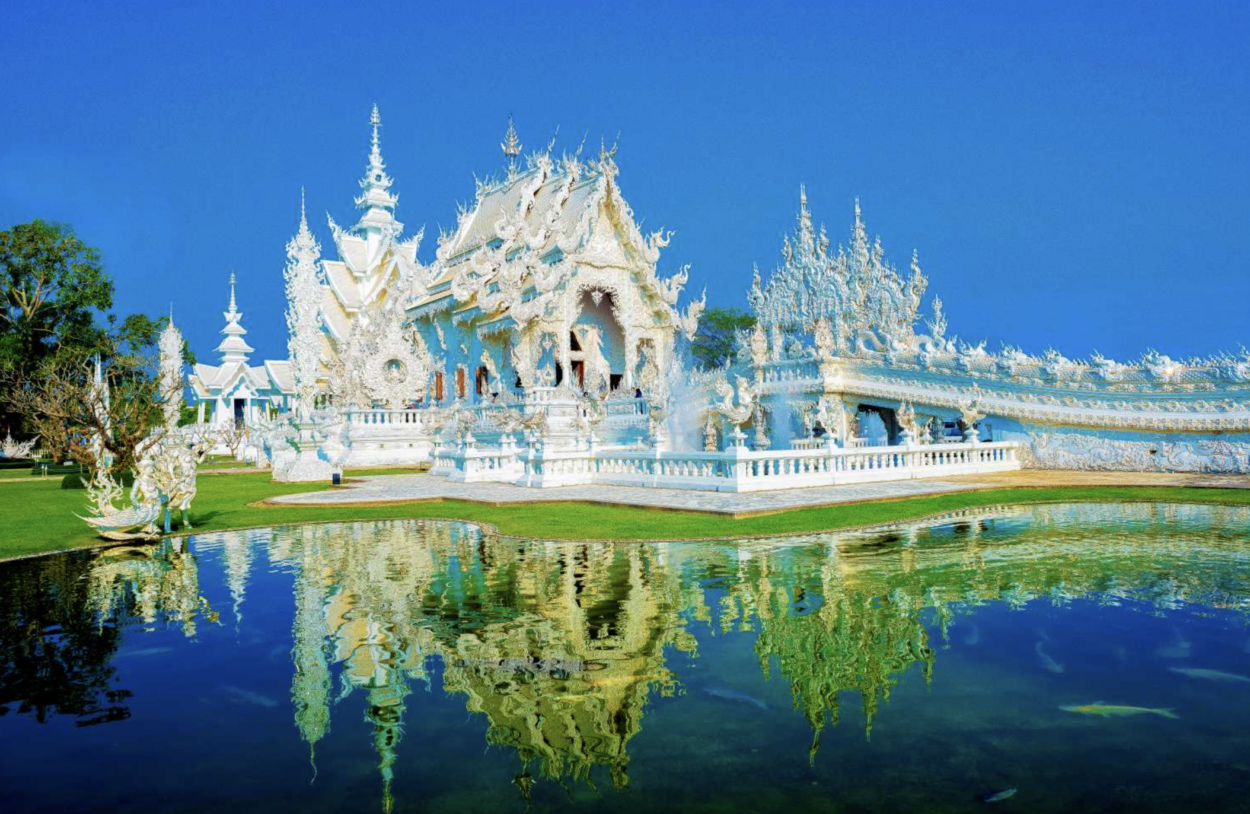
Image courtesy: Tourism Thailand
Wat Rong Khun
Chiang Rai — Thailand
It is unlike anything else in the Buddhist world. Conceived by Thai artist Chalermchai Kositpipat in 1997, Wat Rong Khun remains intentionally unfinished. Its white façade, embedded with mirrored glass, scatters sunlight into thousands of shimmering reflections. To approach it across the bridge above the reflecting pool, on a cloudless morning, is to feel briefly unmoored from the ordinary.
The whiteness is intentional and symbolic: purity of the Buddha’s teachings, refracted endlessly through glass. Hands reaching upward from the ground beside the bridge represent souls in suffering, grasping toward mercy. The interior murals are astonishingly contemporary.
Kositpipat paints new panels continuously, weaving Buddhist cosmology alongside figures from modern culture with unsettling, visionary fluency.
Wat Rong Khun does not ask to be compared to ancient temples. It insists on its own terms entirely. In a region defined by gold and red temples, this blinding white complex arrives as a striking surprise.
It proves the sacred impulse in architecture remains alive, restless, and still capable of the extraordinary.
The Essentials: Located 13 kilometers south of Chiang Rai city; best reached by taxi or songthaew. Arrive early, the morning light on the white surface is the most dramatic. Modest dress strictly required; photography inside the main hall is not permitted.
Angkor Wat
Siem Reap — Cambodia
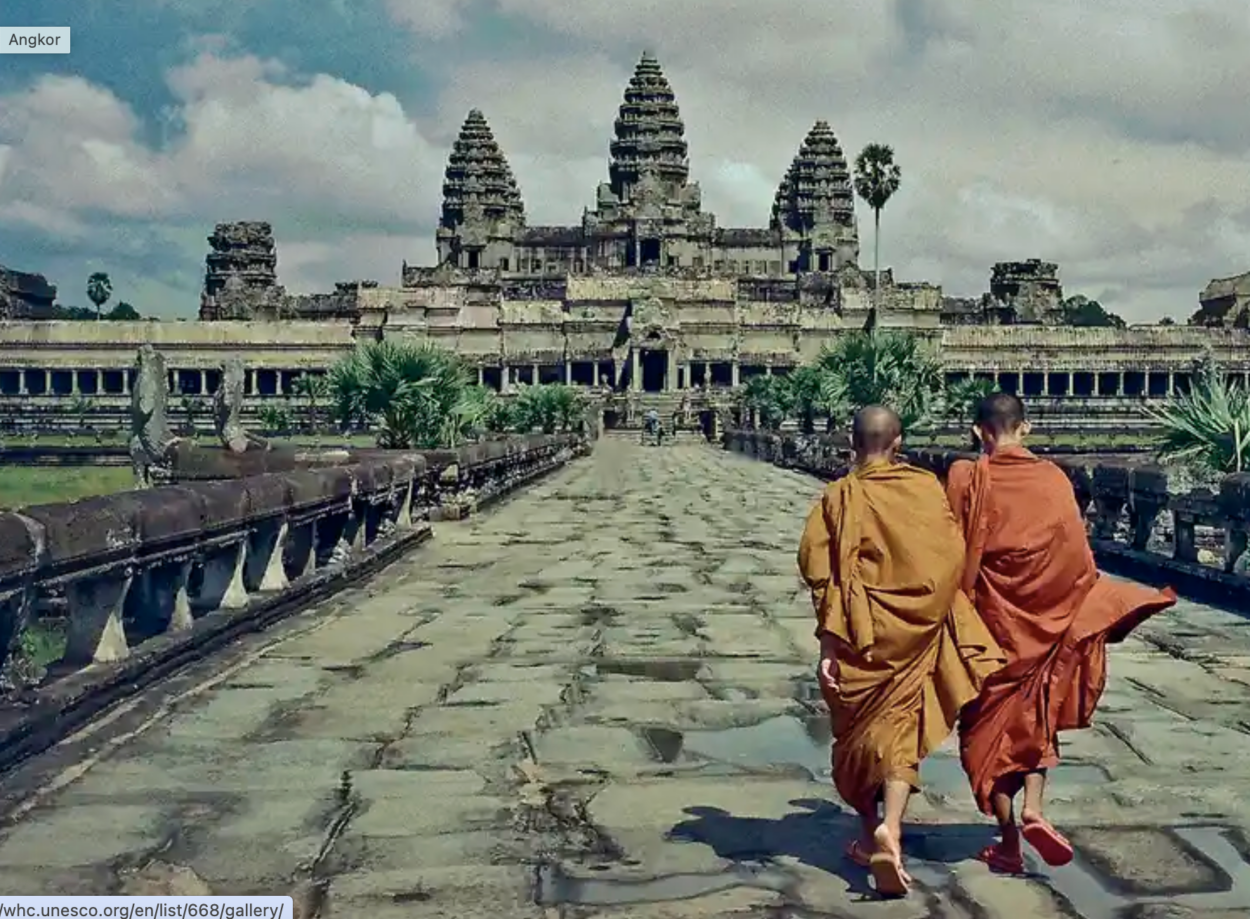
The largest religious monument ever built by human hands does not reveal itself all at once. Angkor Wat emerges slowly as five towers pierce pre dawn darkness across the horizon. Their reflection trembles in the moat, shifting as sunrise turns stone into deep amber.
Built in the 12th century by Khmer King Suryavarman II, Angkor Wat was first dedicated to Vishnu. It later evolved into a Buddhist site with vast bas reliefs depicting cosmic battles and celestial dancers. During Buddhist festivals, monks in saffron move through these corridors like brushstrokes against ancient stone.
The Essentials: A 3-day pass is the minimum to do justice to the wider Angkor complex. Arrive at the western entrance before 5:30am for the sunrise reflection. Modest dress, covered knees and shoulders, is required throughout.
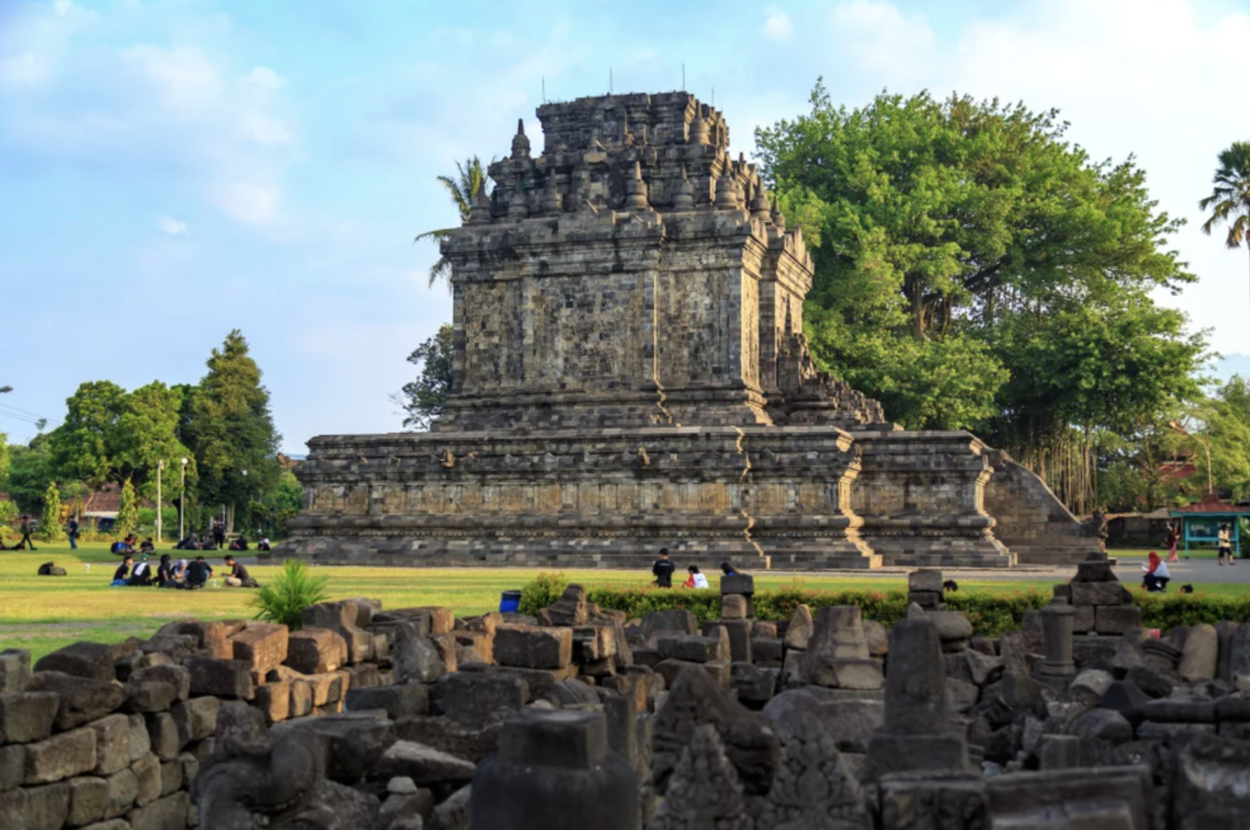
Image courtesy: Wonderful Indonesia
Candi Mendut
Magelang, Central Java — Indonesia
Three kilometers east of Borobudur, Mendut is where the journey properly begins. Compact and intimate, it rewards those who linger rather than rush. Mendut, Pawon, and Borobudur align in a mysterious straight line across Central Java’s landscape. Some believe it echoes Orion’s Belt, though its full ritual meaning remains beautifully unknown.
Inside the main chamber, three colossal 9th century stone statues radiate a quiet authority unlike anything else in Java. The central Dhyani Buddha Vairocana is flanked by Bodhisattva Avalokitesvara in a dim sacred space. Their presence fills the hall in ways photographs completely fail to capture.
The monks of the adjacent monastery maintain a stillness here that feels earned, not performed.
The Essentials: Let Mendut have the morning before moving on to Pawon and Borobudur. Its interior statues are lit by early light entering through a single carved opening. They remain among Java’s most emotionally striking and unforgettable sights.
Wat Phra That Doi Suthep
Chiang Mai — Thailand
A white elephant, according to legend, chose this site by stopping and refusing to move, and so a temple was built. Wat Phra That Doi Suthep has watched over the mountain above Chiang Mai since the 14th century.
Its golden chedi is visible from the city below on clear mornings. The ascent via a naga flanked staircase of 309 steps is itself a form of meditation.
At the summit, the chedi blazes against the mountain sky beyond what photographs can capture.
Jasmine garlands and incense drift through cool air above Chiang Mai’s quiet, distant sprawl.
The Essentials: Take the red songthaew from Chiang Mai University. Modest dress is required. The hour before sunset, when the chedi seems to absorb and return the light, is the finest time to be here.
What unites these places across centuries and countries is their refusal to be merely scenic. They reward travelers who arrive with patience rather than rigid itineraries. Standing in spaces loved for centuries cannot be scheduled; it simply arrives in stillness. Pack lightly, remove your shoes, and stay longer than planned.
Cover Image courtesy: Wonderful Indonesia