
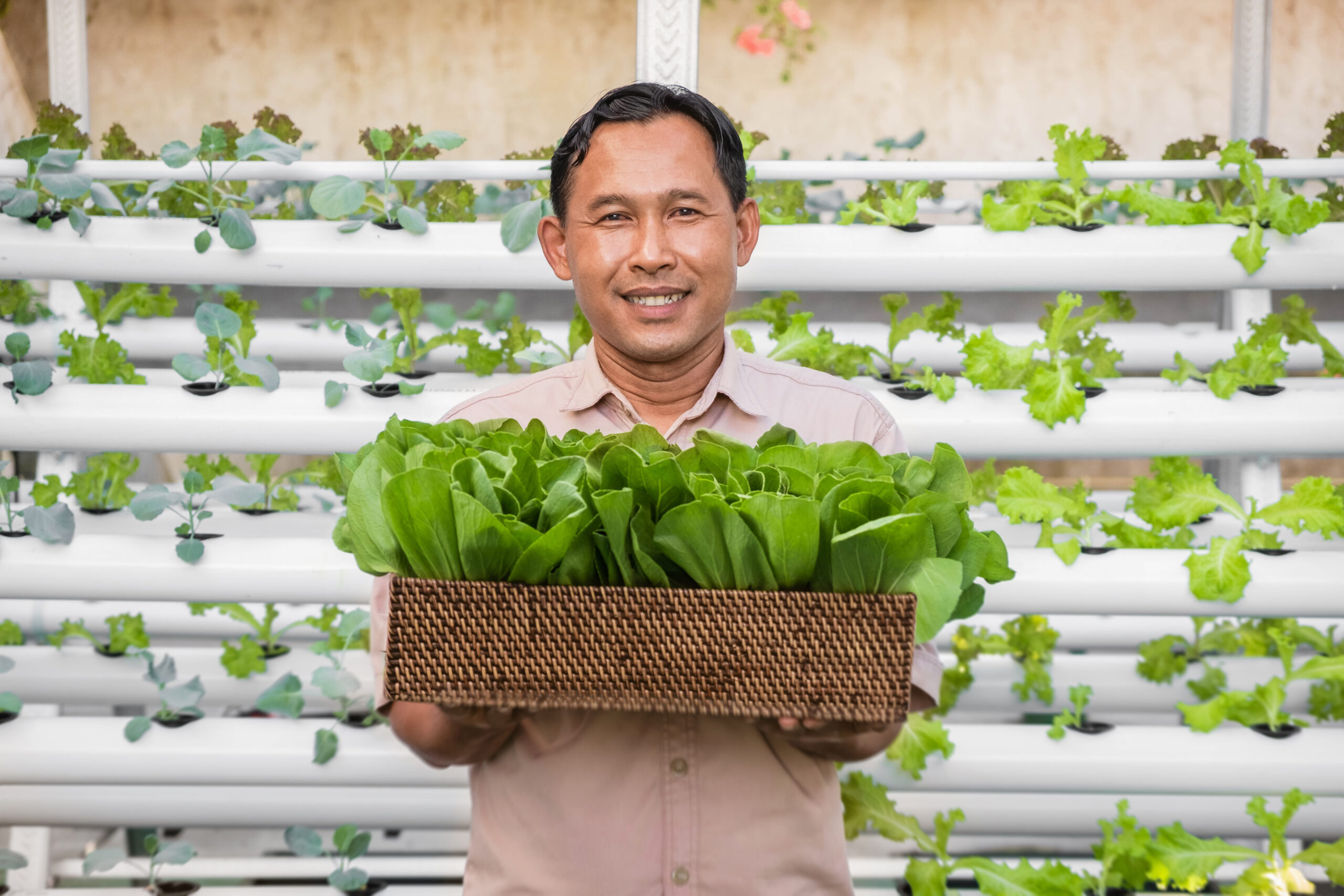
At The Apurva Kempinski Bali, sustainability lives in the soil, the kitchen, and the village, not in the brochure.
Sustainability has become one of luxury hospitality’s loudest conversations. Yet volume rarely equals truth. Behind many polished eco-pledges, the evidence runs thin, and travellers have learned to notice. Here at The Apurva Kempinski Bali, the team answers that scepticism with a simple rule. What the hotel says must match what it does, every single day.
Practice Before Promotion
A meaningful commitment looks nothing like a campaign. It looks like patience. Real impact grows from steady, accountable effort, and aggressive publicity cannot shortcut that work.
Trust follows the same path. The hotel keeps its storytelling honest by mirroring its daily routines rather than polishing them. Certification then supplies the proof. As the first hotel in Indonesia to earn Global Sustainable Tourism Council (GSTC) Certification, The Apurva Kempinski can show guests independent, verified results. That recognition now anchors a wider pursuit of sustainable growth across every aspect of ESG: environmental, social, and governance.
Where Abundance Meets Restraint
Luxury has long meant abundance. Think fresh towels twice a day, buffets that refill by the hour, and air conditioning set to Arctic.
Sustainability asks for the opposite: use less, waste less, take only what you need. On paper, the two look like natural enemies.
The Apurva Kempinski sees it differently. The hotel believes true sustainability belongs to everyone, so guests play a genuine part in the strategy. Interactive carbon footprint tracking and food waste solutions put practical tools in their hands. The team considers these tools the engine of any successful sustainability system.
Lectures have no place here. Instead, the hotel weaves eco-responsibility into the guest journey itself. Sustainable choices appear naturally within daily operations, so guests learn without feeling taught. Warm, world class hospitality does the persuading. Those who want to go further can offset their ecological footprint during their stay.
In truth, luxury and sustainability need not compete. Together, they can elevate the stay. Sophisticated travellers worldwide now seek deeper meaning in their journeys, which makes sustainability the new luxury.
The Apurva Kempinski meets that desire by introducing green initiatives mindfully into its services. Step by step, the hotel redefines luxury, moving from sheer abundance toward purposeful regeneration.
A Philosophy Older Than the Hotel
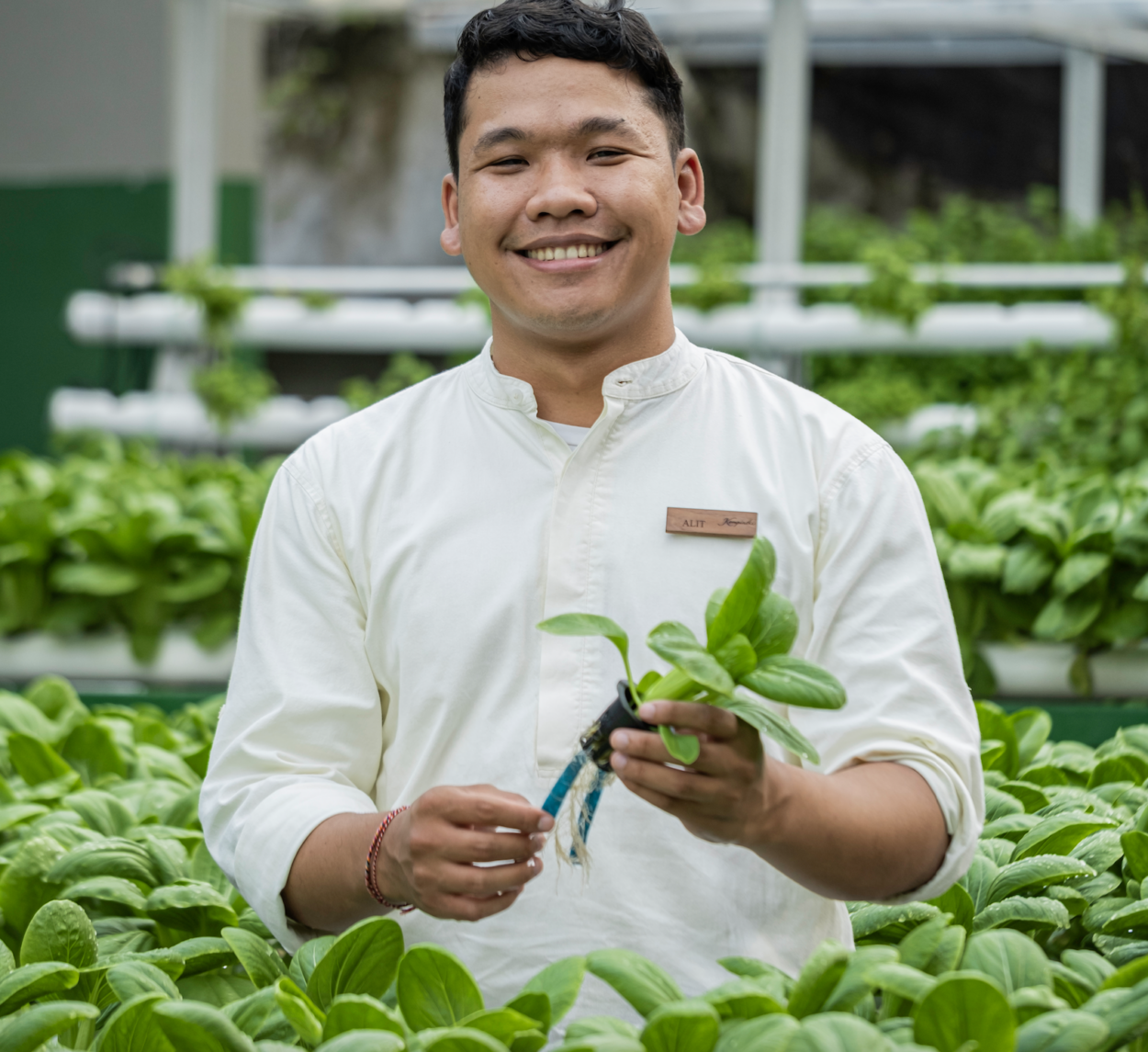
For a resort rooted in Bali, honouring Balinese life is not optional. Ketut Alit Widiana, the hotel’s Environmental & Sustainability Supervisor, calls it the very essence of its hospitality. Tri Hita Karana guides that belief. This time tested philosophy has woven sustainability into Balinese daily life for centuries.
Pawongan, the principle of harmony among people, shapes how the hotel treats its neighbours. The local community should share in the prosperity that tourism creates. That thinking echoes the modern Triple Bottom Line. When people, planet, and profit move in balance, Alit says, a business can endure.
The Rooftop That Fed a Village
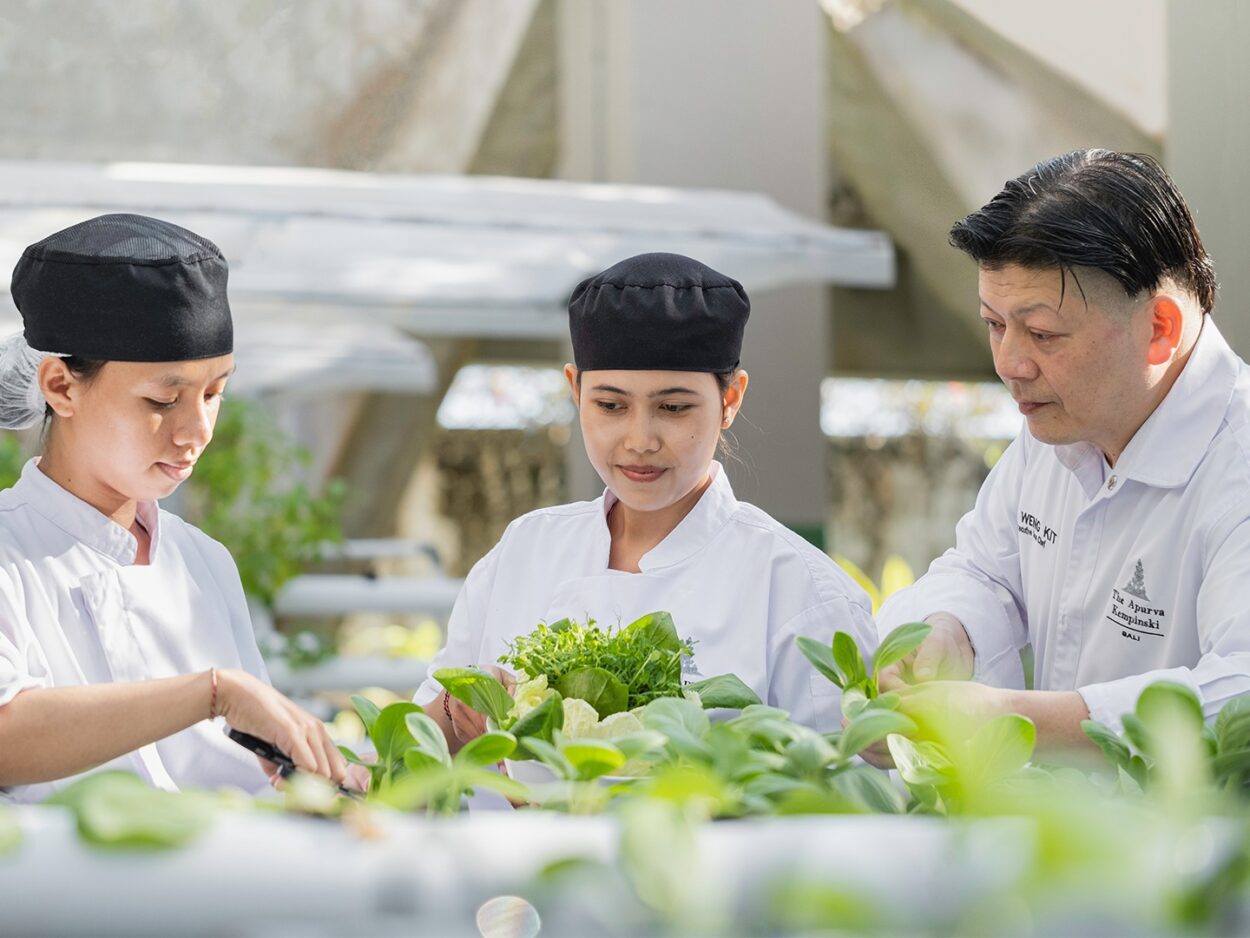
Among the hotel’s many sustainability efforts, one project rises above the rest, quite literally. The Apurva Kempinski calls it an interconnected, zero waste hospitality ecosystem. It began on a forgotten rooftop.
There, a 300-square-metre space once sat idle. Today, it grows 1.8 tons of specialised microgreens and edible flowers each year.
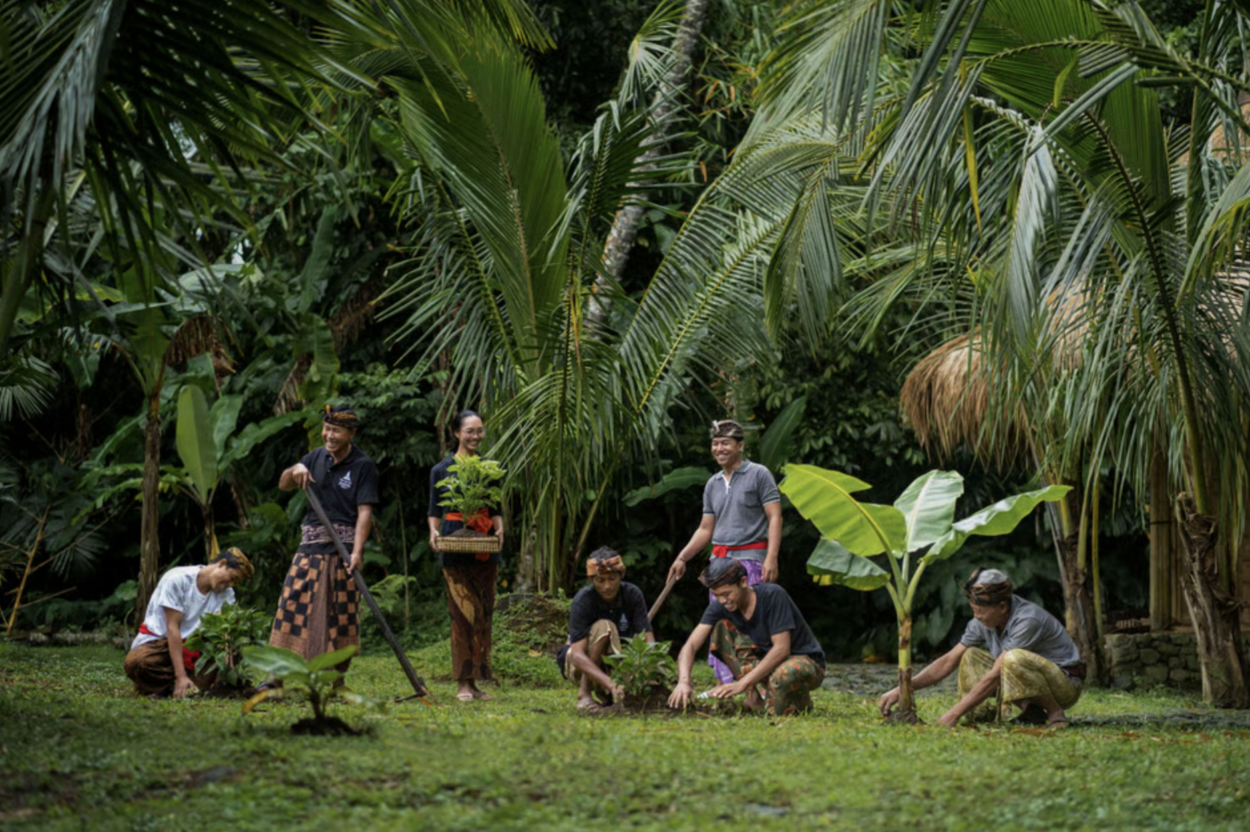
That early success gave the hotel a blueprint, and the idea soon travelled to Karangasem. Seven local farmer collectives now receive training in organic farming, along with tools to work their land. The hotel then buys back 100 percent of their harvest at hotel rates. As a result, local families enjoy stable livelihoods. Meanwhile, the cycle closes inside the hotel itself.
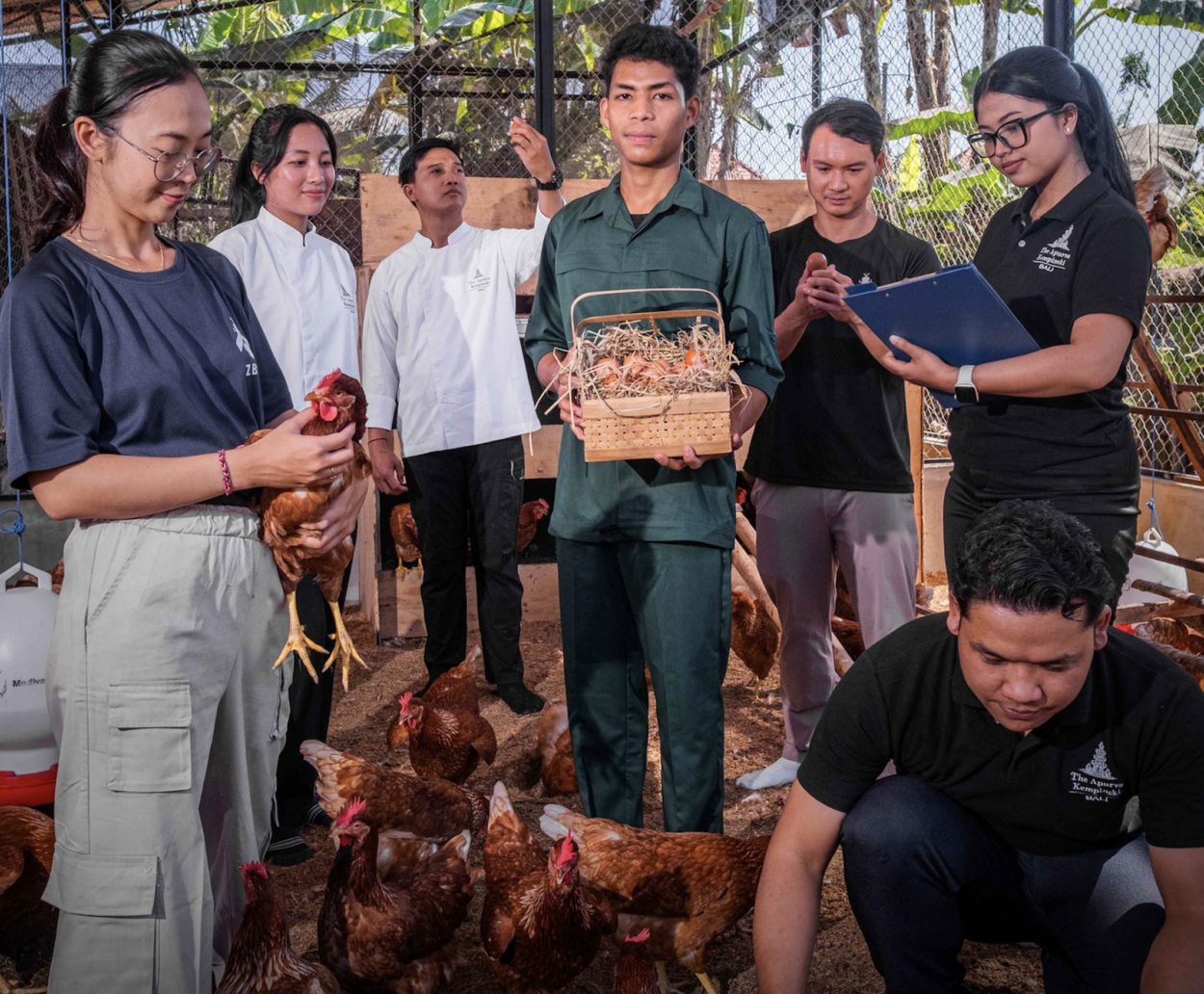
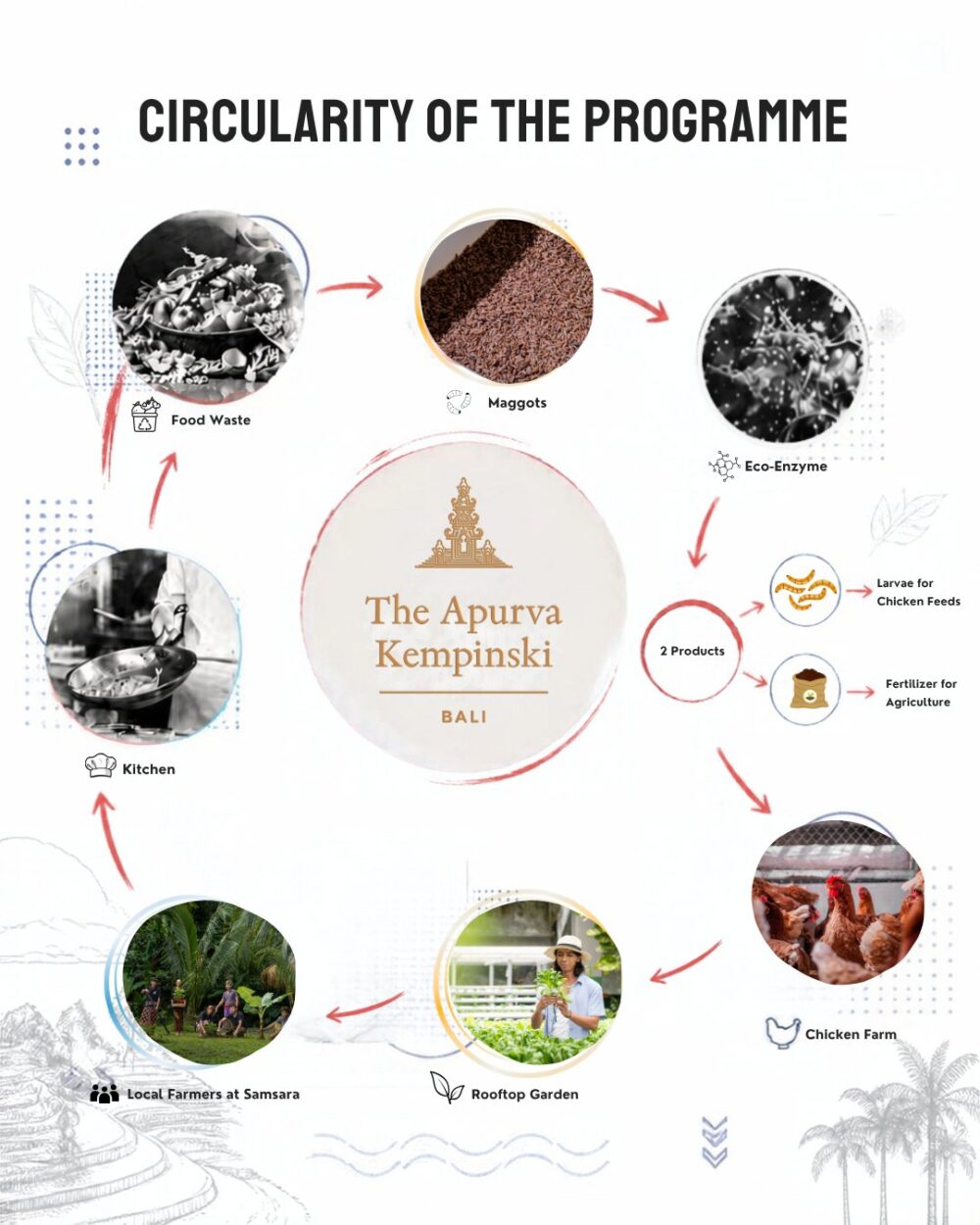
Kitchen organic waste no longer reaches a landfill. Instead, black soldier fly larvae consume 120 to 150 kilograms of it every day. The resulting compost returns to the farmers’ soil and nourishes the next harvest. The harvested larvae, in turn, feed 350 cage-free hens. Those hens lay 280 eggs a day for the culinary teams, an 80 percent efficiency rate. Together, these links form a loop with no waste at its end. The hotel sees it as living proof that luxury can nurture people, planet, and profit in one circle.
Seeds of Change
The hotel’s yearly campaign, Path to Sustainable Growth 2026: Regenerate for the Future, pushes that idea further. Its newest chapter is Seeds of Change, a post event incubation programme. Over two months, it mentors, develops, and funds Indonesia’s most promising student teams and early-stage startups. These founders work where regenerative tourism meets sustainable innovation.
Crucially, the programme turns a one day summit into a lasting platform. Sponsors gain a CSR avenue with measurable outcomes. The hotel gains a year round thought leadership narrative. Meanwhile, the next generation of talent gains the means to carry the regenerative mission forward.
The Luxury Worth Taking Home
If luxury now means better rather than more, what should a hotel offer? The Apurva Kempinski answers with a sustainable experience that reaches beyond its gates. Guests receive the tools and insights to live more sustainably and to share those habits with their own circles. Those who wish to go further can offset their footprint during their stay.
Accountability then seals the promise. The hotel prioritises audited results over short-term profit, and it tracks every investment for its social, economic, and environmental returns.